Northern Portugal
Porto
Riverfront history, Port wine, food and the easiest access to the Douro Valley.
| Ideal duration | 2–3 days in the city; 4–5 with day trips |
|---|---|
| Best for | Couples, food and wine, first-time visitors, city breaks |
| Car needed | No in the city; avoid keeping a rental car centrally |
| Good for families | Yes, with breaks: the riverfront gradients tire small children |
| Walking level | Hilly; the historic riverfront has significant gradients |
| Best combined with | Douro Valley, Braga & Guimarães, Aveiro, Foz |
| Best time of year | May–June and September–October; winter is mild but wet |
Why visit Porto?
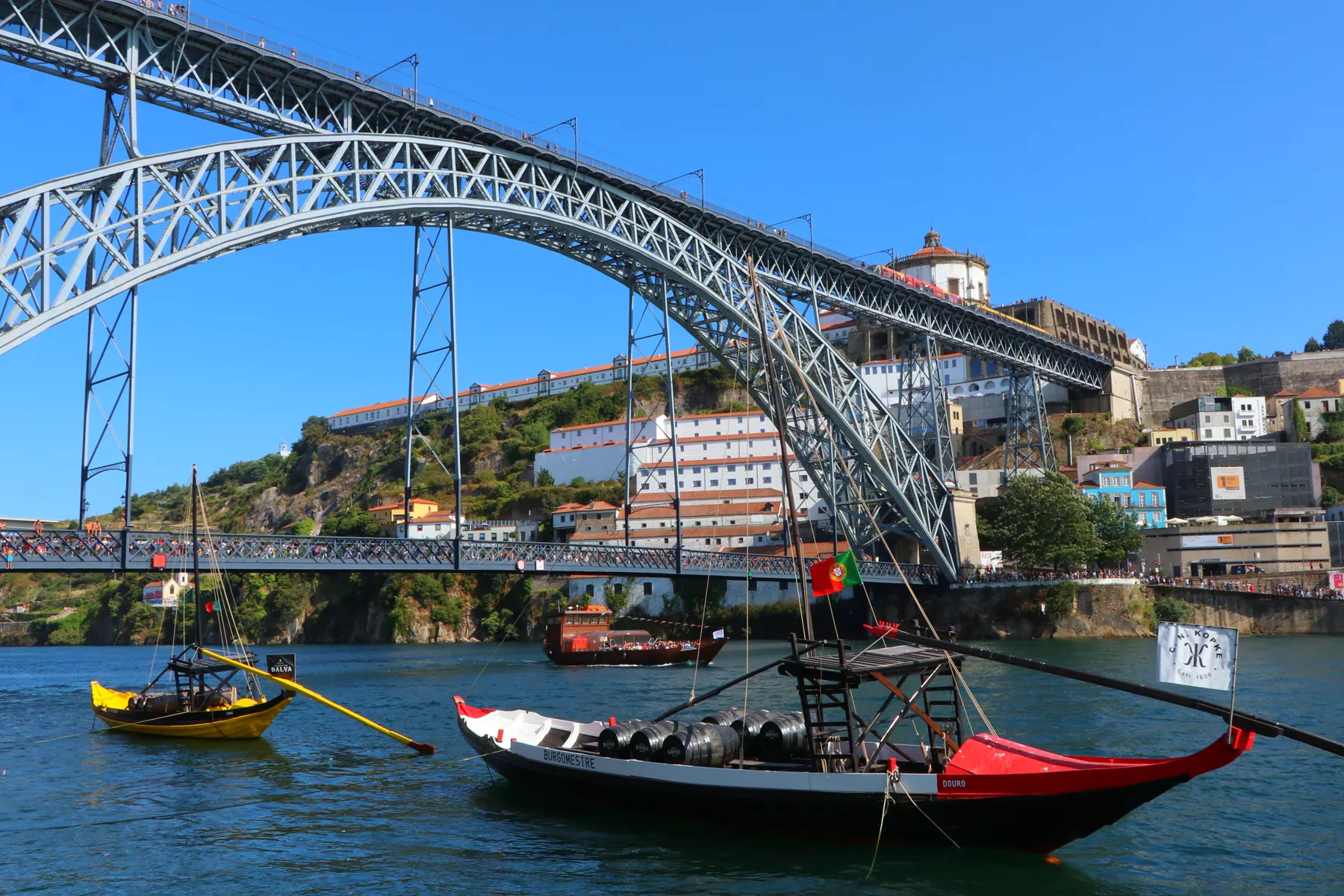
Porto is compact, walkable in sections and unusually legible: the relationship between the city, the Douro river and the Port wine trade explains most of what you see. The historic center and Ribeira sit above the water, the wine lodges face them from Vila Nova de Gaia, and the river continues west to meet the Atlantic at Foz.
It suits travelers who like to understand a place rather than tick off monuments. Food, markets, tiled churches, bookshops and a strong café culture are as much part of a visit as the landmarks.
How many days do you need?
Two full days is the realistic minimum for a first visit: one for the upper center down to Ribeira and across to Gaia, one for markets, one cultural stop and Foz. A third day gives you a choice rather than a compromise — the Douro Valley, or Braga and Guimarães, or simply more Porto.
If wine and landscape are a major reason you came north, treat the Douro as a full day rather than an afternoon.
Best time to visit
Late spring and early autumn usually give the best balance of daylight, temperature and crowd levels. Porto is an Atlantic city, so rain is possible in any season and indoor options matter more than in the Algarve.
Harvest season in the Douro (roughly September) makes a valley day feel more alive, but it is also busier at estates, so book ahead.
Main areas
- Historic center and Ribeira — the core sights, steepest streets and the busiest riverfront.
- Baixa and Cedofeita — shops, cafés, galleries and a more everyday city rhythm.
- Vila Nova de Gaia — the Port lodges and the classic view back at Porto.
- Foz do Douro — where the river meets the Atlantic: beaches, gardens and a long waterfront.
- Bonfim and Campanhã — residential neighborhoods that are easier on the budget and well connected by metro.
Day trips from Porto
- Douro Valley — by train, car, small-group tour or private driver, depending on what you value.
- Guimarães and Braga — medieval foundation story and Baroque religious heritage in one day.
- Aveiro and Costa Nova — a flat, colorful contrast to Porto's hills.
- Matosinhos and the coast — a short trip for seafood and an Atlantic walk.
Planning Porto for your travel context
Traveling as a couple
Three days is generous for a couples' break. Keep one dinner booked and the rest open, and leave space for viewpoints and a slow breakfast rather than starting every day at opening time.
Traveling with children
The gradients and cobbles are real. Mix riverside and Foz time with shorter historic-center sessions, and use the metro or taxis to avoid repeated climbs at the end of the day.
Culture and history
A private guide adds most value here when you want the city's commercial, religious and wine history connected rather than narrated building by building.
Food and wine
One well-chosen Port tasting with time to understand the styles beats hopping between lodges. Markets, seafood in Matosinhos and a Douro day extend the theme naturally.
Porto: frequently asked questions
- Is three days enough for Porto?
- Yes for a first city break. If one of those days goes to the Douro Valley you effectively have two city days, which still works but requires more selective planning.
- Should I stay in Porto or Gaia?
- Porto is more convenient for neighborhood exploration and evenings. Gaia can offer better river views and easy wine-lodge access. Choose based on the rhythm you want rather than distance alone.
- Do I need a car in Porto?
- No. Walking, the metro and taxis cover the city. A car is only useful if Porto is part of a wider road trip, and parking in the historic center adds friction.
- Is Porto walkable?
- In sections. The center is compact but the riverfront is steep, and a day that repeatedly climbs from Ribeira back to the upper city is tiring for most people.
Related guides
3 days · Couples
Three Days in Porto for Couples: A Relaxed Itinerary With Food, Wine and the Atlantic
The most romantic version of Porto is not the one with the most attractions. Three days with space for long lunches, viewpoints and unscheduled evenings.
Read the guide1 day · Couples
Douro Valley From Porto: Train, Car, Group Tour or Private Driver?
There is no single best way to see the Douro from Porto. A decision guide comparing train, self-drive, small-group tours and a private driver.
Read the guide5 days · First-time visitors
Five Days in Northern Portugal: Porto, Douro, Braga, Guimarães and a Flexible Fifth Day
Base yourself in Porto, give the Douro a full day and keep the fifth day free. Why fewer stops produces a better northern trip.
Read the guide